焦糖
New book chronicles Guangdong’s millennium of trade, tracing China’s commercial spirit_我的网站

A |
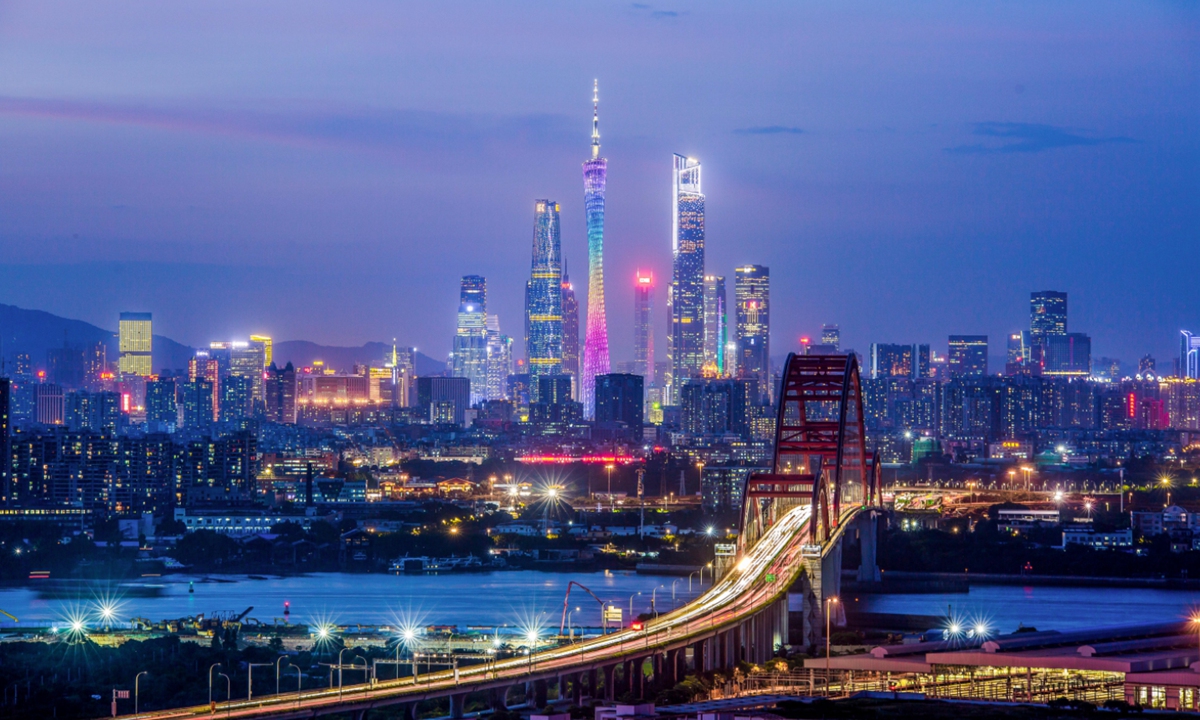
Night view of Guangzhou's CBD in South China's Guangdong Province Photo: VCG
The monumental full length reportage
Ballet of Commerce: The Epic of Guangdong's Foreign Trade by famous writer He Jianming is set to make its debut at the Southern China Book Fair from August 27 to 31 in Guangzhou, South China's Guangdong Province.
Published by the Guangdong Education Publishing House, the book is the first of its kind to offer a panoramic account of Guangdong's millennium of trade and will be presented as a special offering for 2026's APEC "China Year," Xu Xiaofeng, an editor with the publishing house, told the Global Times on Monday.
China will host the 33rd APEC Economic Leaders' Meeting in Shenzhen, Guangdong in November. It will be China's third time hosting the event, following Shanghai in 2001 and Beijing in 2014.
He, a former vice chairman of the China Writers Association and recipient of the Lifetime Achievement Award for Chinese Reportage Literature in 2023, told the Global Times on Monday that as the world watches the evolving trade relationship between China and the US, there is a growing need for a book that can help Western readers gain a deeper understanding of China's trading culture and how Chinese people have conducted business throughout history.
Guangdong marks the starting point of China's thousand-year maritime trade with the world. Through its foreign trade trajectory, the book reflects China's broader trade evolution, the enduring values of the Chinese spirit in the modern era, and the distinctive civilizational traits that have shaped China's rise, He noted.
Guangdong is both the birthplace of the ancient Maritime Silk Road and a pioneer of China's reform and opening-up. As a vital artery of commercial exchange between China and the rest of the world, the Maritime Silk Road has witnessed the evolution and transformation of the Chinese economy over the centuries.
During the Sui (581-618) and Tang (618-907) dynasties, silk was among the main goods transported along the route, earning it the name "Silk Road." During the Song (960-1279) and Yuan (1279-1368) dynasties, porcelain became a major export commodity, leading the route to be known as the "Porcelain Road." By the Ming (1368-1644) and Qing (1644-1911) dynasties, tea had emerged as a sought-after Chinese export in Europe, giving rise to yet another name - the "Tea Road," according to a report by the Counselor's Office of the Guangdong Provincial People's Government.
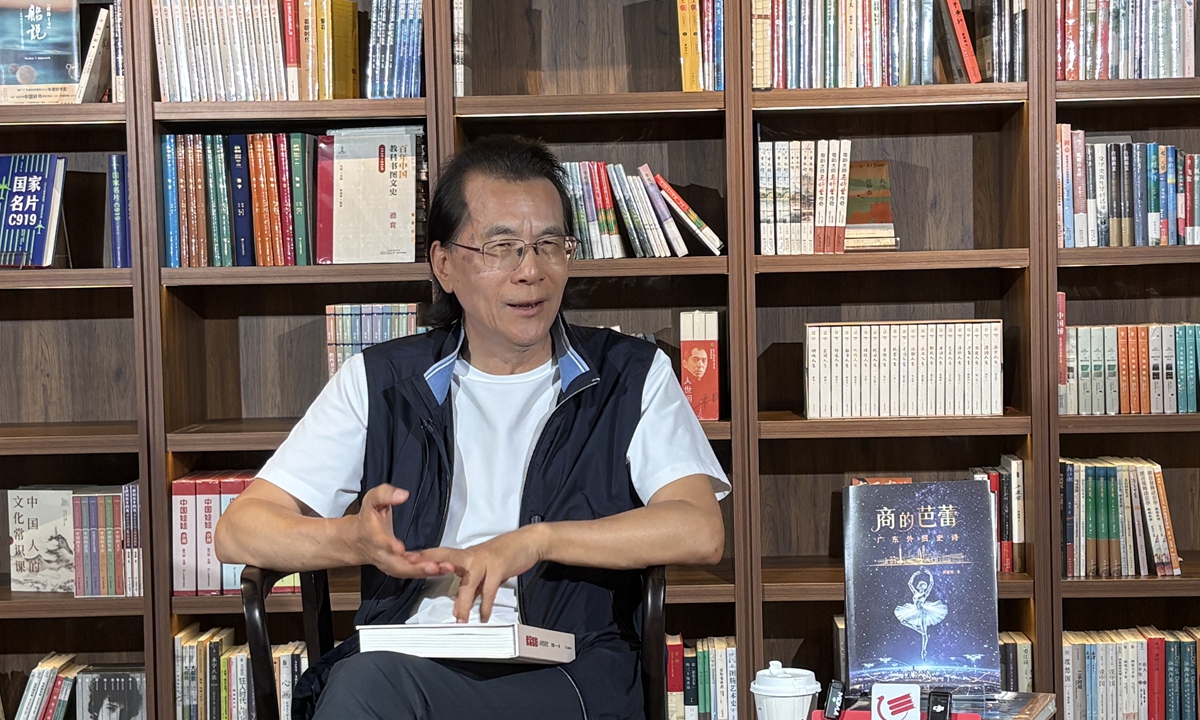
He Jianming talks about his new book on August 10. Photo: Wu Jie/GT
Mutual benefitGuangdong, China's largest foreign trade province, accounts for about one-fifth of the country's total trade and imports. As a major manufacturing hub with deep and extensive industrial chains, it creates significant demand for production factors, the Xinhua News Agency reported.
In the first half of this year, Guangdong's foreign trade reached 5.49 trillion yuan ($810 billion), surpassing the 5-trillion-yuan mark for the first time in the same period on record. The figure represented a year-on-year increase of 20.8 percent and accounted for 21.6 percent of China's total foreign trade. The province contributed an additional 944.71 billion yuan in trade volume, accounting for 25.6 percent of the country's foreign trade growth, according to official statistics released in July.
Having interviewed over 100 enterprises and institutions, He said that the book revisits the enduring legacy of the Maritime Silk Road, highlighting the exchanges between China and the West and the fusion of diverse civilizations.
"At the heart of Chinese business culture is the belief that 'harmony is the most valuable.' Rooted in traditional Chinese culture, this philosophy emphasizes cooperation and mutual benefit. Rather than viewing strength as a means to overpower others, Chinese merchants have traditionally embraced the idea that prosperity should be shared. When one grows stronger, others can benefit and achieve success together. This aspect of Chinese commercial culture remains unfamiliar to many in the Western world," said the 70-year-old writer.
Wang Yuanlin, a professor at the School of Humanities Guangzhou University, told the Nanfang Plus (a Guangdong-based news platform) that mutually beneficial and fair foreign trade policies, together with Guangdong merchants' long-standing tradition of integrity and win-win cooperation, have been key factors behind the province's enduring success in foreign trade.
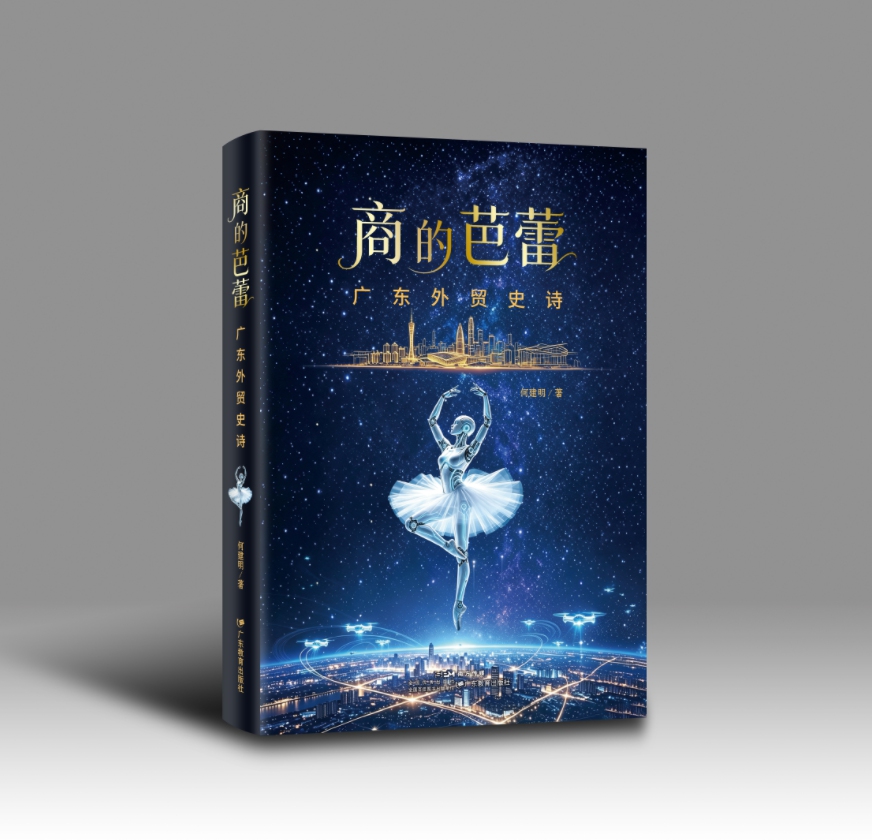
Ballet of Commerce: The Epic of Guangdong's Foreign Trade by He Jianming Photo: Courtesy of Xu Xiaofeng
Elegant businessThe author said that the choice of "ballet" in the book's title reflects the idea that Chinese business practices have developed into an art form - one characterized by balance and elegance.
"I want the Western world to understand that when the Industrial Revolution was just beginning and the Renaissance was sweeping across Europe, Chinese people had already mastered the art of commerce," He said.
Through conversations with entrepreneurs ranging from grassroots business founders to prominent corporate leaders such as Dong Mingzhu, chairperson of Gree Electric Appliances, He chronicles Guangdong's transformation from a millennia-old trading hub into a global industrial powerhouse.
"Just imagine: Employees at a private company can step into a space capsule after lunch and take a nap in their own private sleeping quarters. With a company like that, how could it not succeed?" he said.
From the exchange of handcrafted goods in the agricultural era to today's trade in high-tech products such as semiconductors and drones, Chinese people have developed a business culture centered on the principle that "harmony is most valuable" over thousands of years of commercial exchange.
This cultural tradition has become a key in driving the continued growth of trade in Guangdong and across China, He added.
。 在近年来的国际舞台上,美国与伊朗之间的紧张关系愈演愈烈。特朗普政府发起的对伊朗经济战,从其一开始就显得毫无章法,仿佛一场没有预演的即兴表演。美国财政部长贝森特高调宣布制裁措施的同时,却又在记者会上改口,表现出对中国等国立场的不安。 美国对伊朗的经济战背后是经济压力所迫。霍尔木兹海峡的局势日益紧张,油轮遭遇袭击,立即将美国推向了战争边缘。尽管美国声称要通过经济手段制裁伊朗,然而实际情况却是伊朗凭借地理位置的优势,正在对美国施加压力。美债收益率上升、通货膨胀加剧,使得特朗普政府对伊朗的强硬措施显得仓促且缺乏深思熟虑。以“经济战”作为武器,究竟能否真正扭转局势,实在值得怀疑。 事实上,特朗普政府面对的挑战早已超出了单纯的对伊政策。在国内,随着经济指标不断恶化,民众的失业率攀升,政府需要寻找替罪羊,以转移公众视线。

B | 而在国际上,盟友们的态度也在悄然改变,加拿大对于美国的关税政策展现出前所未有的强硬,仿佛在预示着美国在全球经济中的影响力正在逐步削弱。 当美国国务院的内部文件显示外交官重新驻回中东时,无疑是一个显著的信号:美伊之间的直接军事冲突似乎正在缓和。难道真的是美国在权衡利弊之后放弃了动武吗?抑或是在面临通货膨胀和美债危机的双重压力下,不得不选择退让? 全球经济中的一个新动向显现出来——金砖国家的崛起。

C | 正值美国与伊朗关系紧张之际,金砖会议在印度召开,中国参与的人数规模空前,显示出其在多边合作中的日益重要角色。这样的变化意味着,国际社会正朝着去美元化的趋势发展,尽管美国依然试图通过经济制裁维护其霸权地位,但这种威信的衰退却是不可逆转的。 在分析未来的走向时,我们不能忽视美国政府内部对是否继续动武的分歧。一方面,有人呼吁保留对伊动武的选项;另一方面,越来越多的声音则警告这条路可能带来不可控制的后果。在这样的背景下,特朗普政府有必要认真审视其外交政策,特别是如何处理与伊朗、与盟友之间的关系。 归根到底,伊朗革命卫队的强硬表态以及美国各方的反应清晰地传达出一个信息:美国已经失去了对伊朗的绝对控制力。

D | 这种转变不仅体现在军事层面,更多的是经济层面的博弈。美国的经济戰虽然名为“针对伊朗”,实则反映出其自身的不堪重负。特朗普的政府陷入内外困境,在全球化的今天,其单边主义显得格外脆弱。

E | 美国与伊朗的博弈展现出全球政治体系中的复杂性,而每一次的冲突都可能成为历史的一部分。新的国际格局正在悄然形成,单极世界的消亡昭示着多极化的到来。可以断言,在接下来的几年里,无论是美国抑或是伊朗,都必须面对更为复杂和动态的国际环境,只有那些能够适应变化和灵活应对的国家,才能在风云变幻的国际舞台上立于不败之地。返回,查看更多。
Current article:http://z3bvn.panningbuquanchencaibingzhang.cyou/gqpl5l/20260826/4394.html
Published on:04:47:30


